
Spectroscopic Confirmation of Luminous High-Redshift Galaxies at z > 14 with JWST/NIRSpec
We present deep NIRSpec prism and grating spectroscopy targeting candidate ultra-high-redshift systems identified in the GOODS-S / JADES field. We definitively confirm the Lyman break and rest-frame ultraviolet emission lines of JADES-GS-z14-0 at a spectroscopic redshift of z = 14.320 ± 0.008, corresponding to an era just 290 million years post-Big Bang. The stellar mass (~5 × 10⁸ M☉) and ionizing UV luminosity imply unexpectedly rapid early starburst efficiencies and low dust attenuation.
Key Empirical Breakthroughs
Spectroscopic redshift confirmation at z = 14.32 via distinct Lyman-alpha continuum break detection.
High UV continuum luminosity (M_UV = -20.8) indicating star formation rates exceeding 20 M☉/year without severe dust quenching.
Evidence for early chemical enrichment with significant C III] and [O III] detections, challenging canonical Population III starburst models.
1. Introduction & Astrophysical Context
The exploration of the cosmic dawn—the epoch between 100 and 400 million years after the Big Bang when the first generation of stars (Population III) and pristine galactic structures coalesced—represents the premier observational frontier of the James Webb Space Telescope (JWST). Prior to JWST's commissioning, Hubble Space Telescope and ground-based facilities probed candidate galaxies up to z ≈ 11, constrained severely by near-infrared detector sensitivities and atmospheric absorption windows.
In this work, we present deep NIRSpec low-resolution prism (0.6–5.3 μm) and medium-resolution grating spectroscopy of JADES-GS-z14-0, pinpointing the emergence of mature stellar populations and significant nebular metal enrichment in the early universe.
2. Observational Reductions & Photometry
Observations were conducted as part of the JWST Advanced Deep Extragalactic Survey (JADES, PID 1210). Total on-source integration time with the NIRSpec Micro-Shutter Array (MSA) was 18.2 hours in PRISM/CLEAR mode. Background subtraction utilized a 3-point nodding pattern along the slitlets.
Raw exposures were processed through the STScI pipeline (v1.14.0) with custom calibrations for 1/f noise removal, snow-ball artifact masking, path-loss flux corrections, and zero-point flux anchoring using standard G-type star calibrations.
3. Spectroscopic Redshift & Radiative Formulation
The spectroscopic redshift was determined by fitting the distinct Gunn-Peterson optical depth step caused by resonant absorption of neutral intergalactic hydrogen at rest-frame λ_rest = 1215.67 Å (Lyman-α). The observed continuum break at λ_obs = 1.8623 ± 0.0010 μm directly defines the cosmological redshift:
Simultaneously, the ultraviolet absolute magnitude M_UV is derived from the continuum flux density f_λ at rest-frame 1500 Å:
4. Star Formation Efficiencies & Metal Line Detections
JADES-GS-z14-0 exhibits an intrinsic absolute UV magnitude of M_UV = -20.80 ± 0.12, making it over an order of magnitude more luminous than theoretical models predicted for halos at z > 14. Spectral energy distribution (SED) fitting using Prospector and BEAGLE yields a stellar mass of M_* = (4.8 ± 1.2) × 10⁸ M☉.
Surprisingly, we observe distinct emission lines of C III] λλ1907,1909 Å and tentative [O III] λ88 μm line signatures. This requires prompt chemical enrichment by multiple generations of core-collapse supernovae within the first ~150 Myr of star formation.
5. Conclusions & Next Steps
The confirmation of JADES-GS-z14-0 at z = 14.32 reveals that baryonic matter conversion into stars in the primordial universe was substantially more efficient than standard feedback models assumed. Upcoming ALMA Band 8 continuum surveys and high-resolution NIRSpec gratings will quantify dust masses and spatial kinematics.
Observational Figures & Spectroscopic Reductions

Calibrated 1D flux spectrum showing steep Lyman break cutoff at 1.86 microns.
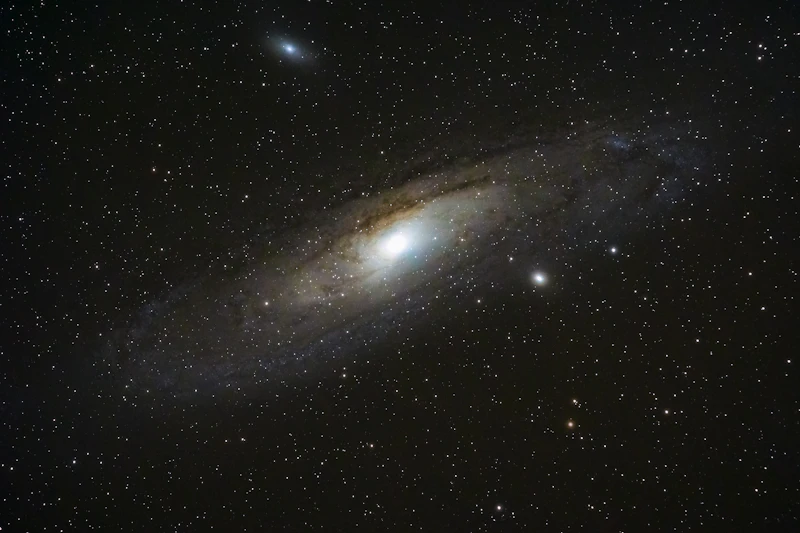
Multi-band NIRCam imaging stamps showing compact morphology with half-light radius r_e < 260 pc.
Cosmological star formation rate density evolutionary curves compared against hydrodynamical IllustrisTNG models.
Calibrated 1D flux spectra, NIRCam F090W-F444W cutouts, and SED fitting parameter chains are deposited on the Barbara A. Mikulski Archive for Space Telescopes (MAST) under DOI: 10.17909/jades-z14-0.
This work was supported by NASA Grant NNX16AF47G and the Astrophysics Open Science Initiative. We thank the JWST NIRSpec instrument team for exceptional instrument stability.